 Regulated firm
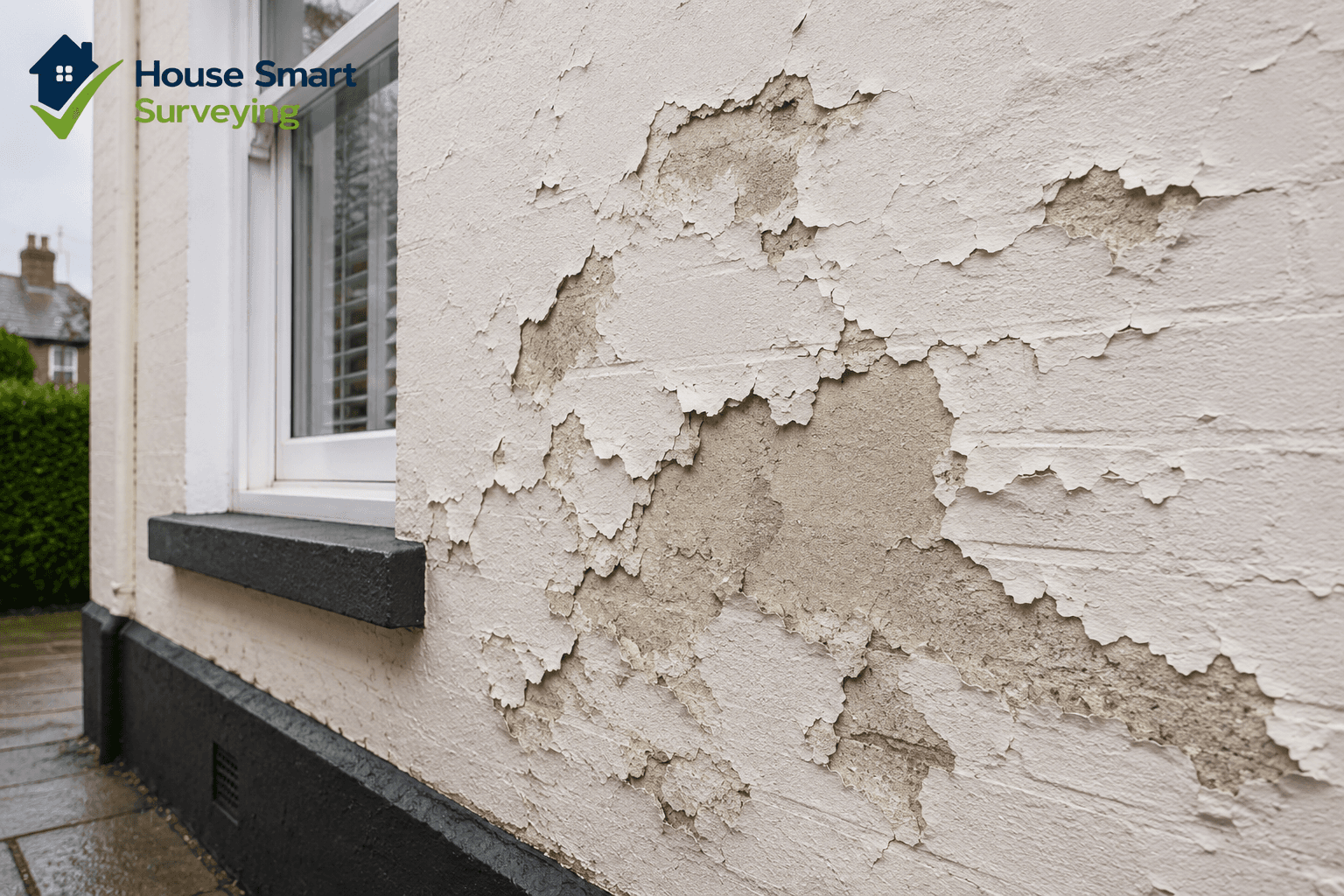
Masonry paint and trapped dampness on period homes
Older solid-wall properties were designed to breathe: moisture enters the fabric during rain, and evaporates back out during dry spells. Modern plastic masonry paints form a waterproof film on the outer face that blocks that evaporation. Moisture still gets in through hairline cracks, cill defects and driving rain, but it can no longer get out.
The result is trapped damp behind the paint film, blown render, perished brickwork hidden by the coating, and persistent internal dampness that no amount of internal treatment can cure. A freshly painted period elevation can conceal a saturated wall for years — which is why we take the paint film seriously on any pre-1919 property we inspect.
Our surveyors identify inappropriate coatings on solid-wall construction, assess the moisture condition of the fabric behind (moisture meter readings on internal plaster, external tap-testing where safe), and advise on breathable alternatives. Where the paint film needs to come off, we recommend the correct sequence of works to avoid causing more damage than the paint itself did.
Because this defect is characteristic of solid-wall construction and often signals other moisture-management issues, we generally recommend a Level 3 Building Survey on any painted period elevation. The extra depth pays for itself easily on a single accurate diagnosis.
A crisp new coat of masonry paint on a period property is worth a question, not a compliment. Ask what’s underneath. Your surveyor will.
What we look for on site
The right path back to a breathable wall
If a period wall has been coated in plastic masonry paint and moisture is now trapped, the correct remedy is (1) identify and stop the moisture ingress sources (gutters, cills, pointing), (2) remove the paint film using an appropriate mechanical or chemical method that does not damage the substrate, (3) allow the wall to dry over an extended period (weeks to months), (4) redecorate with a breathable mineral paint or limewash.
This is a specialist job, and it is expensive: paint removal alone on a typical semi runs £2,500-£5,500 in scaffolding and labour. But leaving the paint film in place means the underlying damp continues, and the eventual remedy (perished brickwork replacement, section rebuilding) can be an order of magnitude more.
“Painting a period wall in plastic paint is like putting cling film around a sponge. The sponge doesn’t stay dry — it just stops drying out.”