 Regulated firm
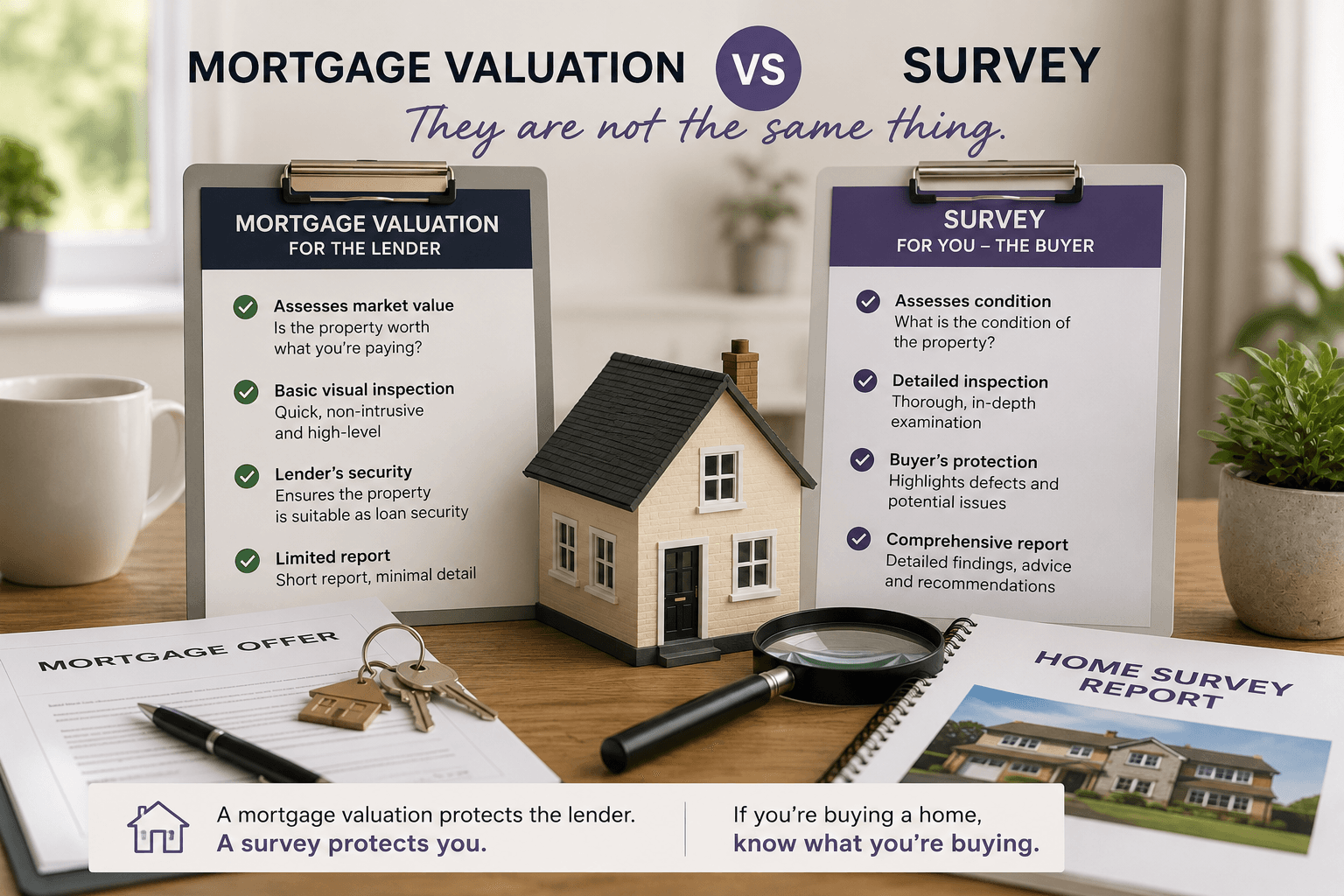
What a mortgage valuation actually is
A mortgage valuation is commissioned by your lender, paid for (usually) by you, and carried out to answer exactly one question: is this property worth what the lender is being asked to lend against it? It is typically a brief visit — sometimes only a drive-by or a desktop assessment using comparable sales data — and the resulting report is often only a handful of lines long.
Crucially, the valuer's duty of care runs to the lender, not to you. You may never even see the full report, and if it does flag a condition issue, it will usually be phrased as a condition of lending (“subject to a damp specialist's report”) rather than as advice to you about whether to proceed with the purchase.
The real differences, side by side
“The mortgage valuation is not a survey. It is a five-line desktop check for the lender, and every year we see buyers treat it as though it were both.”
Why lenders don't require more than this
Lenders are only exposed to the loan-to-value ratio, not the full value of the property, so their risk is already partially protected by your deposit. That is why their valuation can afford to be brief — the lender's downside is capped. Yours isn't. If the property needs £15,000 of roof repairs, that cost sits entirely with you, whether or not the mortgage valuation happened to notice the roof at all.
Cash buyers feel this gap most acutely, because there's no mortgage valuation at all in the process, brief or otherwise — nothing stands between you and the property's actual condition except a survey you choose to commission yourself.
Book a RICS survey commissioned for you, with a written report and a call to talk through the findings.
Mortgage valuation vs survey: FAQs
The bottom line
Your lender's valuation protects your lender. Your survey protects you. They are not substitutes, they are not the same length, and they are not looking for the same things. Budget for both, and don't let the first one arrive and lull you into skipping the second.